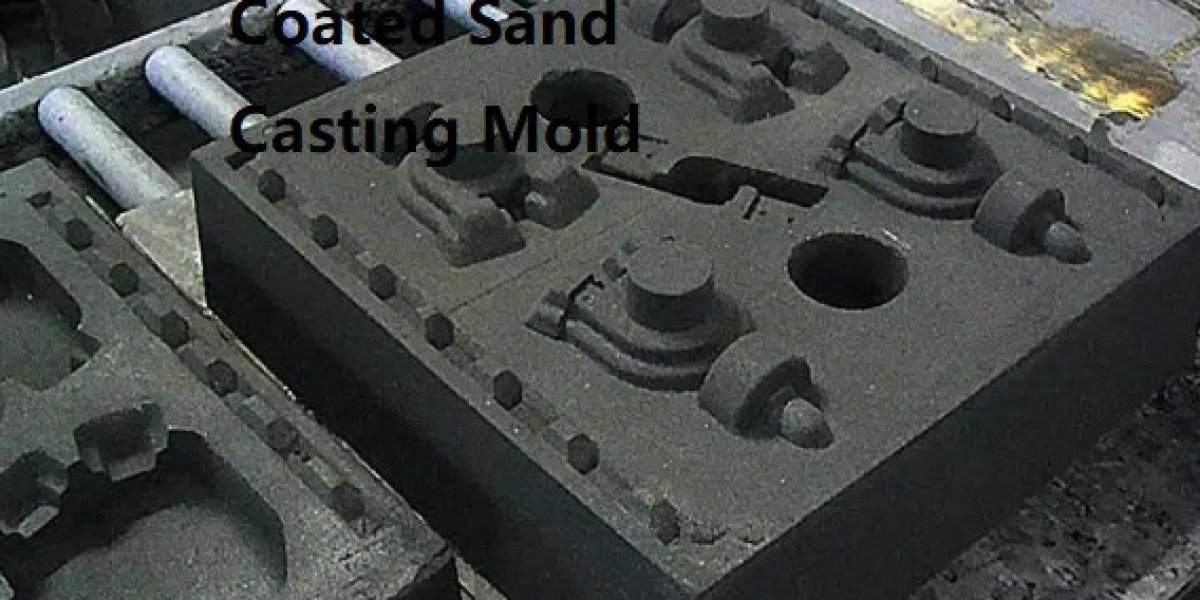

In metal casting, the mold directly influences how molten material forms the final component, making surface condition and cavity accuracy important from the beginning. When manufacturers need controlled molding performance, a Coated Sand Casting Mold can provide a practical approach for forming detailed casting cavities and supporting smoother metal flow. For production environments where repeatability matters, a Coated Sand Casting Mold can also help create a more controlled interface between molten metal and the sand surface. The coating may contribute to a smoother cavity condition, while the sand structure provides flexibility for different casting geometries. Choosing the right molding approach requires attention to part shape, metal characteristics, casting temperature, surface expectations, production volume, and post-casting requirements.
Why Surface Coating Matters in Casting
The cavity surface has a direct relationship with the appearance and quality of a finished casting. A suitable coating can create a more controlled contact layer between the molten metal and the sand mold.
This layer may help reduce direct interaction between the metal and sand while supporting a cleaner casting surface. The specific coating approach should be selected according to the material being cast and the process conditions involved.
Surface preparation is also important. Uneven application, contamination, or insufficient drying may influence the final result.
For this reason, manufacturers should treat coating as part of the overall molding process rather than as an isolated step.
When coating requirements are clearly defined, production teams can establish more consistent preparation procedures and evaluate results more effectively.
Managing Complex Cavity Details
Many cast components contain holes, curves, recesses, raised sections, and other geometric features. These details must be accurately represented inside the mold.
A sand-based molding solution can offer flexibility when developing different casting shapes. At the same time, complex cavities require careful attention to pattern design and molding accuracy.
The relationship between cavity geometry and molten metal flow should also be considered. Sharp transitions or narrow areas may affect how metal fills the mold.
Manufacturers can review these areas during the tooling development stage and identify features that may require additional process attention.
Clear dimensional requirements can make communication between design and production teams easier, particularly when casting projects involve multiple component variations.
ChinaHzjx for Flexible Casting Projects
Casting projects can vary significantly in terms of component size, geometry, material, and expected production volume. A tooling solution should therefore be selected according to the actual project rather than a single standard approach.
Manufacturers may need to consider whether a mold is intended for prototype work, limited production, or repeated manufacturing. Different project stages can create different priorities for tooling preparation and process control.
Sample castings can provide valuable feedback. By inspecting surface condition, dimensional accuracy, and visible defects, production teams can determine whether additional adjustments are necessary.
This evaluation stage can help connect tooling development with real manufacturing conditions.
It also provides an opportunity to refine process parameters before production quantities increase.
Supporting Casting Quality Through Preparation
Good casting results depend on more than the mold itself. Pattern condition, sand preparation, coating application, drying, pouring conditions, and cooling can all influence the finished component.
Consistent preparation helps reduce unexpected differences between production batches.
Operators can establish clear procedures for checking mold surfaces before pouring. Areas showing damage, contamination, or uneven coating may require attention before the next casting cycle.
Pouring conditions should also be considered alongside mold characteristics. Excessive turbulence or unsuitable pouring practices may create defects even when the mold has been properly prepared.
A coordinated approach allows manufacturers to examine the entire casting process rather than focusing on one individual factor.
Planning Maintenance and Long-Term Use
Regular inspection can help maintain predictable molding conditions. Sand molds and related tooling components may experience wear or changes during repeated operations, depending on the production method.
Maintenance planning can include checking patterns, molding equipment, coating preparation tools, and storage conditions.
Proper storage is particularly useful when tooling or patterns are not used continuously. Protecting components from unnecessary damage can make them easier to prepare for future projects.
Production records can also help identify recurring issues. If a particular cavity repeatedly requires adjustment, the information may point toward an opportunity to improve the tooling or process.
For manufacturers exploring practical casting solutions, understanding the relationship between mold structure, surface coating, metal flow, and production conditions can make project planning more effective. To learn more about related casting equipment and solutions, visit https://www.chinahzjx.com/. Reviewing your casting material, component geometry, surface requirements, production volume, and process conditions can provide a useful foundation for selecting a suitable molding approach.