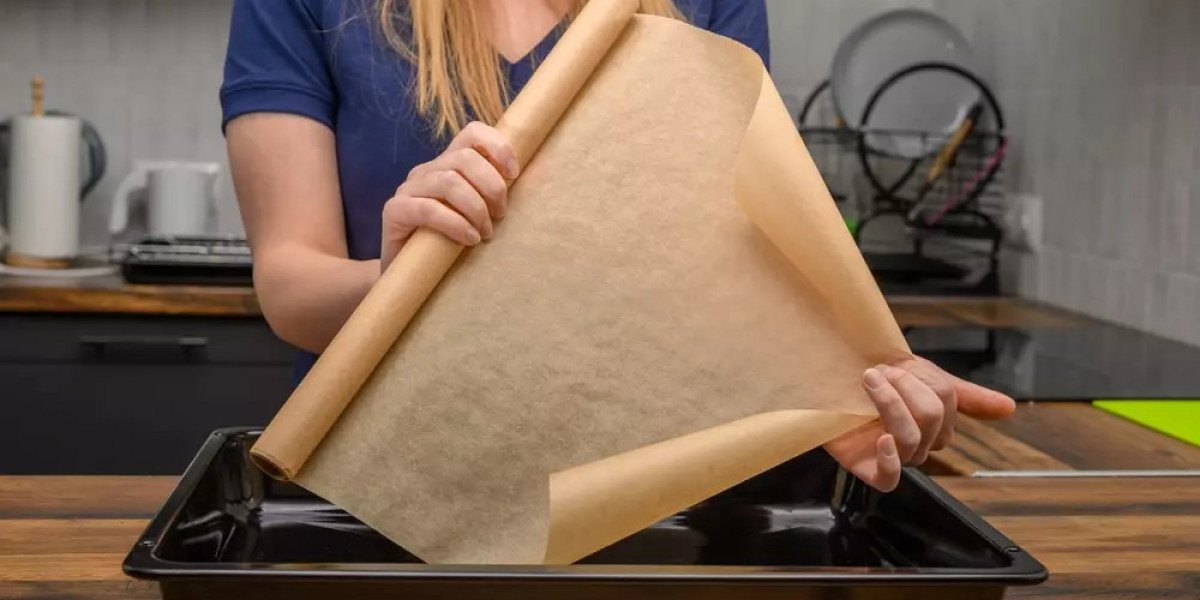

As modern food preparation continues to emphasize convenience, hygiene, and process efficiency, specialized paper materials have become an important part of professional and household kitchens. In this context, Parchment Paper provides a practical surface for baking and cooking applications while helping users manage ingredients more efficiently. Its development involves careful fiber selection, coating technology, manufacturing control, and application-focused design, making material quality an important consideration for both food businesses and everyday consumers.
The foundation of baking paper is its paper substrate. Manufacturers need to consider fiber quality, formation, strength, and surface characteristics when developing suitable material structures. Consistent paper formation can contribute to predictable handling during production and use. Appropriate raw material management is therefore essential for maintaining stable product quality. For food-related applications, manufacturers also need to consider material suitability and production hygiene throughout the manufacturing process.
Coating technology is another important part of specialized food paper production. A functional coating can influence surface behavior, resistance during baking, and the overall interaction between the paper and food ingredients. Uniform coating application requires controlled production processes and careful inspection. Manufacturers must balance functional requirements with practical considerations such as flexibility, folding, cutting, and storage. A well-developed coating system can help the material perform consistently across different food preparation environments.
The Parchment Paper category also reflects changing expectations within the food industry. Professional bakers, restaurants, cafés, food manufacturers, and households may all require paper solutions, but their application methods can differ. Some users may focus on convenient handling, while others prioritize consistent performance during repeated production activities. Understanding these differences allows manufacturers to develop material solutions that are better aligned with actual application requirements.
Baking and cooking also have an important emotional dimension. Home baking can represent creativity, family activities, celebrations, and personal expression. Professional food preparation similarly depends on routines that allow culinary teams to focus on recipe quality and presentation. Practical baking materials can simplify preparation steps and help create a smoother cooking experience. When paper products are easy to handle and integrate naturally into existing workflows, they can become a useful part of both professional and household routines.
Material safety and hygiene remain essential considerations. Food-related paper products need manufacturing processes that support appropriate cleanliness and controlled material handling. Production environments should pay attention to raw material management, coating consistency, converting operations, packaging, and storage. Quality-control procedures can help manufacturers monitor material characteristics and identify inconsistencies before products reach customers. These measures are particularly important when serving international food industries with different application requirements.
Sustainable development is also becoming increasingly relevant to paper manufacturing. Responsible sourcing, efficient material utilization, optimized production processes, and thoughtful packaging can contribute to more sustainable manufacturing practices. Manufacturers can evaluate material use across different stages of production and identify opportunities to reduce unnecessary waste. Such efforts can provide long-term value while supporting the changing expectations of food businesses and consumers.
Professional supply capability is another important factor for international customers. Food businesses often require stable material quality and consistent communication when purchasing paper products for regular production. A reliable manufacturer can support customers through product development, material selection, production coordination, quality inspection, and packaging. This integrated approach helps create stronger relationships between paper producers and downstream food industries.
As baking and food preparation continue evolving, specialized food-grade paper will remain an important supporting material for kitchens and food businesses. Combining suitable fibers, controlled coating processes, quality management, and application-focused development can help manufacturers create dependable solutions for different markets. Businesses looking for professional paper material development and manufacturing cooperation can explore https://www.guanghepaper.com/ for further information about modern food-related paper solutions.